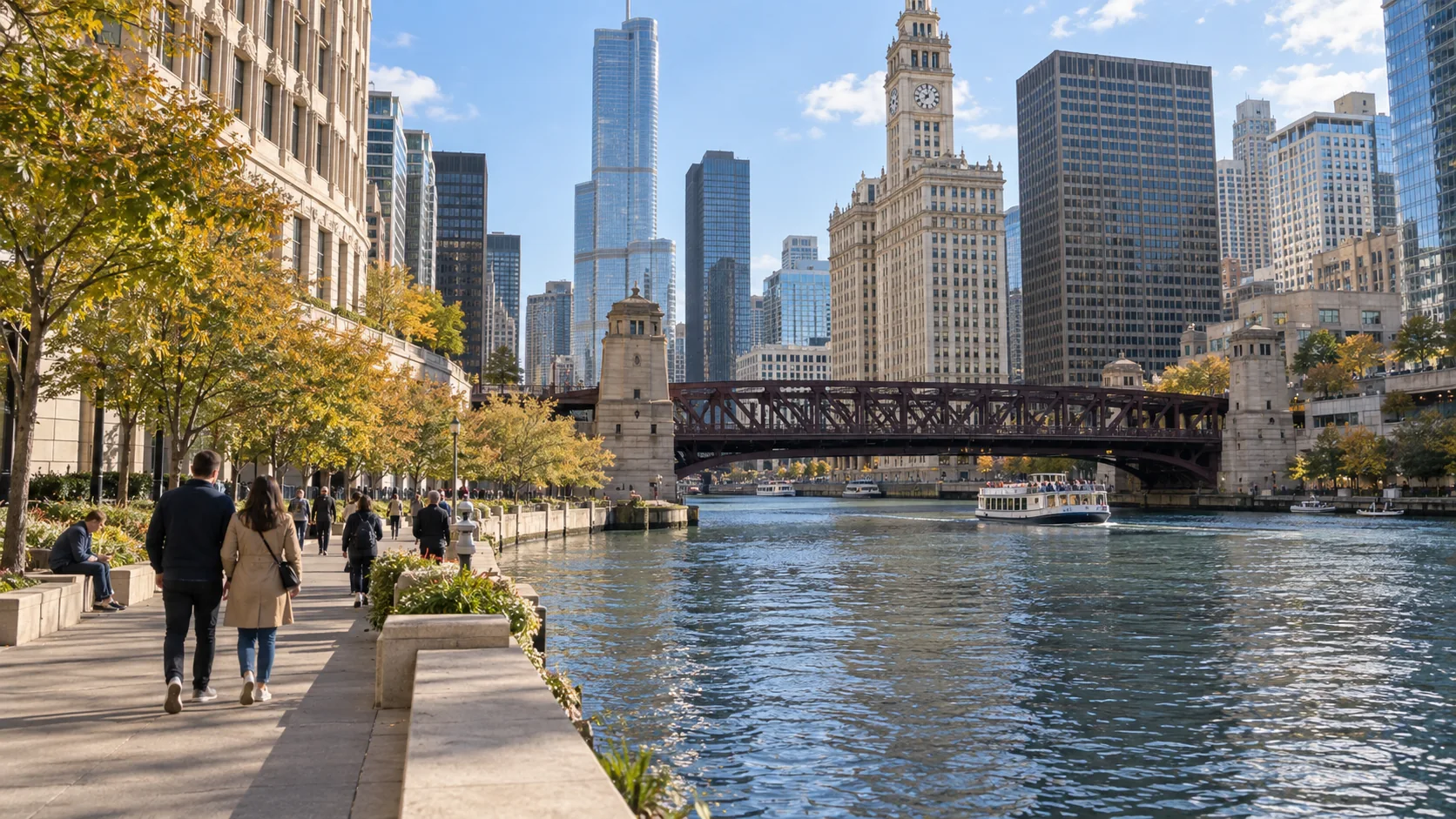
The quickest way to see downtown Chicago differently is to go below street level. Along the Chicago Riverwalk, traffic noise softens, the bridges become part of the view, and buildings that usually tower overhead frame a route beside the water. It is a familiar place that still rewards a slower walk.
The Riverwalk follows the south bank of the Chicago River for about 1.25 miles, from Lake Street toward Lake Michigan. It is not a single uninterrupted mood. One stretch feels open to the sun and passing boats; another tucks beneath a bridge and opens onto a smaller gathering space. Those changes make the route interesting even when the plan is simply to walk.
Start with the river, not a checklist
Beginning at Lake Street gives walkers a gradual approach to the heart of downtown. Looking east, the river bends past older stone buildings and glass towers, while bridgehouses and steel spans show how closely Chicago's streets and water have always been connected. From the river's edge, the bridges are more than crossings: they become a repeating rhythm along the route.
There is no need to turn the walk into a race between landmarks. Stop to watch a boat pass, look up at the contrasting facades, or cross to street level for a different angle before returning to the water. On a clear day, the changing light can make the same block look entirely different on the way back.
Architecture and art at walking speed
Choose Chicago notes that the Riverwalk combines public art, waterfront places to pause, and access to architecture-oriented experiences. The Chicago Architecture Center is near the river, while the McCormick Bridgehouse & Chicago River Museum offers a closer look at the city's movable bridges. Not every stop has to be a formal tour; the waterfront itself is a useful introduction to the cityscape.
Public art also changes the experience. Some works are permanent and others rotate, so a return visit may reveal something that was absent before. The best approach is to leave room for surprise rather than promising yourself a particular installation or performance, since schedules and seasonal programming can change.
A practical downtown outing
The Riverwalk works equally well as a short lunch-hour break or the spine of a longer afternoon. Walk a few blocks and head back to the Loop, or continue toward the lakefront. Many downtown CTA lines and buses bring visitors within walking distance, and the route can be combined with a museum visit, an architecture tour, or a simple stop for food.
Check current access and business hours before setting out, especially outside the warmest months. The lasting appeal, though, does not depend on a reservation. It is the chance to move through the center of Chicago at river level and notice details that are easy to miss from the street.